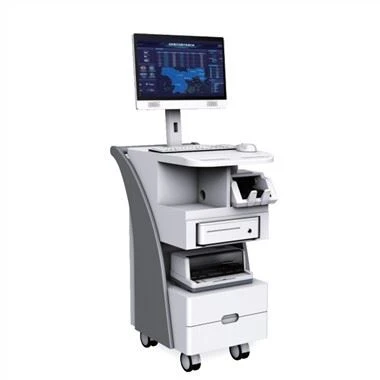
נכון לעכשיו, ניתן לראות את המגע העליון הכל-ב-אחד בשוק בכל מקום, מכונות תורים בנקים, מכונות מדריכי קניות וכו', ללא יוצא מן הכלל, שייכים לקטגוריה של touch all{ {2}}ב-אחדים. גע בכל-ב-כאלה כולל מגע אינפרא אדום ומגע ננו- בסרט לפי מסכי מגע שונים. אז האם המגע הכל-ב-אחד טוב יותר למגע אינפרא אדום או ננו-מגע בסרט?
Touch all-in-one infrared touch: The infrared touch screen used in the infrared touch all-in-one uses an infrared matrix densely distributed in the X and Y directions to detect and locate the user's touch track. The infrared touch screen is a circuit board frame installed in front of the display panel, and the infrared emitting tubes and infrared receiving tubes are arranged on the four sides of the screen to form an infrared matrix that crosses horizontally and vertically. When the user touches the screen, the finger will block the two horizontal and vertical infrared electronic whiteboard lines passing through the position, thus judging the position of the finger on the screen. Infrared multi-touch has the advantages of small size, strong stability, high light resistance and low cost. It can be easily integrated into different products. At the same time, the price of infrared touch all-in-one is lower than that of nano touch all-in-one. , Strong stability.
Touch all-in-one nano film touch: The sensing principle of the nano touch film belongs to the improved projected capacitive principle. The ITO layer (indium tin oxide, which is often required in the manufacturing process of capacitive touch screens and LCD screens) It is replaced by a nanowire layer, and the signal change is accurately calculated through a high-precision measurement algorithm. The nano touch film without ITO layer is one of the main features that distinguish it from other projected capacitive touch screens. The nanomembrane is sensitive to touch, has excellent touch effects, and has a flat surface without grooves. However, nano-film touch control is relatively expensive compared to infrared, and is greatly affected by electromagnetic induction.