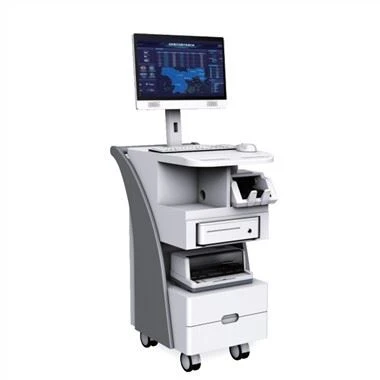
Five advantages of LCD liquid crystal display:
1. Smaller size and lighter weight
The traditional CRT monitor uses the picture tube technology to image, it needs to have a built-in vacuum picture tube, and then equipped with an electron gun at the end, so that the length is generally more than 30 cm, so the volume of the whole display is of course larger. For example, the liquid crystal display uses liquid crystal materials, and then uses the corresponding imaging technology to achieve the display purpose. There is no need to install a picture tube inside the display. The volume is of course small. One-half to one-third of it, with greater flexibility when placed, and its small size, of course, greatly reduces its weight.
LCD liquid crystal display
2, the relative display area is larger
Due to the limitation of display technology, traditional CRT monitors indicate a size smaller than the display area of the fluorescent screen. Generally, a 15-inch CRT monitor has a size of 15 inches, but its real visual range It may be only about 14.1 inches, and a 17-inch display may only have a display area of 15 to 16 inches below it. However, due to the different face-image principle of LCD monitors, the size indicated is the actual display area. For example, the display area of Samsung's 15-inch LCD monitor is completely 15 inches, which is equivalent to the display of a 17-inch CRT monitor. The area, if the price of the two is similar, of course it is much more cost-effective to buy an LCD monitor.
3, zero radiation, no flicker
CRT monitors use cathode kinescope for imaging. The electron beam contained in it generates a lot of static electricity and radiation when it moves. The faster the electron beam runs, the greater the radiation. The long-term use of the human body will cause damage to the eyes and skin. Causes myopia, skin allergies and other problems. Since the liquid crystal display uses liquid crystal materials, it does not need to use electron beams during operation, so there is no problem of static electricity and radiation that affect vision. In addition, the formation of a picture of a CRT display is formed by horizontal scanning. Only when the scanning frequency reaches a certain value, there will be no flicker. However, the liquid crystal display does not require any scanning process, and a picture is formed almost at the same time. The refresh rate is very low, and there will be no flicker.
4, low power consumption, strong anti-interference ability
In addition to the circuit and display power consumption of CRT monitors, there is also the power consumption of the display screen, while the liquid crystal display is mainly the backlight and circuit power consumption, and the power consumption of the display screen can be ignored, like EMC's 15-inch display BM- 568, its power consumption is only 35 watts, which is nearly 50 percent less than CRT products with the same display area. In addition, because liquid crystal displays do not use CRTs and electron guns for imaging like CRT displays, there is no need to consider the high radiation effect caused by increasing the electron beam emitted by the electron gun, but only obtain the brightness through the backlight emitted by the fluorescent tube, so it has a stronger Anti-interference ability, even in the environment with relatively concentrated light, it will receive a good display effect.
5, the picture quality is higher
The traditional CRT monitor adopts the analog display mode, and the signal output of the display card adopts the analog output mode, which may cause the loss of the image during the transmission process, resulting in the decline of the picture quality, while the signal transmission of the liquid crystal display adopts the digital method. Direct input of illegible characters from the graphics card will not cause signal loss. However, most LCD displays still use VGA interfaces for analog displays, and only a few manufacturers such as EMC, Samsung, ACER and other manufacturers have installed digital video signal interfaces.